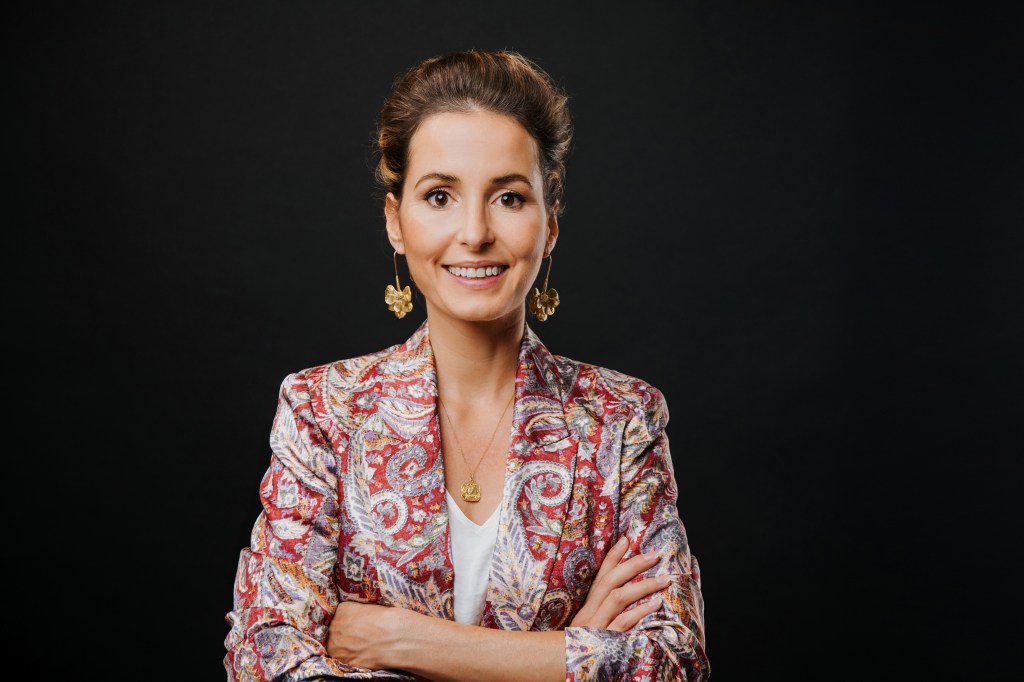
Charlotte E. Blattner, Prof. Dr. iur., LL.M. (Harvard)
I am an associate professor for environmental and administrative law, at the Centre de droit public, Faculté de droit, des sciences criminelles et d’administration publique, Université de Lausanne. I am broadly interested in how the law regulates and mediates the relationship between government and individual subjects, including, most notably, more-than-human subjects (animals, the environment, nature). The focus of my research and teaching is on public, administrative, and public international law, with a focus on climate, environmental, and animal law. I am also an associate researcher with the Oeschger Centre for Climate Change Research (OCCR), University of Bern, where I head the research group Climate Change and the Law: Challenges in Practice and Legal Theory. I hold a doctoral degree in international and animal law from the University of Basel, Switzerland, and an LL.M. from Harvard Law School.
Here’s a longer description of my previous academic undertakings:
I earned my PhD in Law in 2016 from the University of Basel, Switzerland, as part of the doctoral program “Law and Animals – Ethics at Crossroads,” under the supervision of Anne Peters. My PhD thesis examined the possibility and admissibility of applying national animal protection standards to animals in foreign countries – an approach widely accepted and practised in environmental, human rights, and economic law, yet unexplored in animal law. My monograph Protecting Animals Within and Across Borders: Extraterritorial Jurisdiction and the Challenges of Globalization, published by Oxford University Press in 2019, makes the case for and shows how we can protect animals despite globalization and threats of outsourcing. The book offers an in-depth analysis of animal laws across the world and shows how and why extraterritorial jurisdiction can overcome the steepest pitfalls animal law faces and help move us toward a just global interspecies community. With this book, I hope to advance stalled debates in animal law, prompt new policies, and inspire scholars from a range of disciplines (ethics, politics, sociology, economics, etc.) to begin working at this juncture. For my PhD studies, I served as a Visiting International Scholar at the Center for Animal Law Studies at Lewis & Clark Law School, Portland OR, where I worked under the supervision of Professor Kathy Hessler.
From 2017-2018, I was a Postdoctoral Fellow for Animal Studies at the Department of Philosophy at Queen’s University, Kingston ON, Canada, working under the guidance and supervision of Professor Will Kymlicka. My research at Queen’s focused on animal labour. I was particularly interested in tackling some of the most pressing ethical and political questions raised by animal labor, including the desirability of a right to work (published in Animal Studies Journal) and the legitimacy of forced animal labor (chapter in Animal Labour: A New Frontier of Interspecies Justice?). Other papers discussed the relationship of animal labor to ecosystem services (article in Journal of Animal and Natural Resources Law) and trade (Journal of International Wildlife Law and Policy). Together with Will Kymlicka and Kendra Coulter, I edited the book Animal Labor: A New Frontier of Interspecies Justice?, which Oxford University Press published in early 2020.
From 2018 – 2020, I was a Visiting Postdoctoral Researcher at Harvard Law School, Cambridge MA, where I also completed my LL.M. My research at Harvard’s Animal Law & Policy Program marked the beginning of a longer project, by which I hope to spur a broader discourse about the scholarly and practical rapprochement of animal law and environmental law. This approximation becomes increasingly important as climate change begins to pervade our everyday lives and environmental pollution and degradation become realities that can no longer be denied. During my time at Harvard, I published, for example, on the status of animals in environmental law (Tierstudien, Zeitschrift für kritische Tierstudien), just transition in agriculture (Journal of Agriculture, Food Systems, and Community Development), problems of agricultural exceptionalism from a human rights perspective (Journal of Food Law & Policy), and interspecies migration challenges (chapter in Critical Animal Studies Approaches to Borders, Displacement, and Othering).
From 2020-2024, I worked as a Senior Lecturer and Researcher the Institute for Public Law at the University of Bern, Switzerland, where I deepened my research in climate law (see below description of my habilitation). In addition to lectures and case-based practices in public law, I set up two seminars, one focused on human rights and climate law (together with Prof. Judith Wyttenbach), the other on the intersection of climate law and sciences (together with Professors Martin Grosjean and Christoph Raible). I also supervised several master and PhD students dealing with climate law issues (see CV).
Thanks to these doctoral and postdoctoral projects, I was able to study and critically analyze principles and norms in animal and environmental law at a relatively high altitude. The prism of international law allowed me to assess multiple levels of regulation, and compare and contrast laws from a bird’s eye perspective. The prism of political philosophy enabled me to grasp deeper structures underlying (yet often invisible to the law). Equipped with this knowledge and skillset, I was eager to delve deeper into the more concrete and more domestic manifestations of laws relating to the more-than-human. Since 2020, I am writing a habilitation (postdoctoral lecture qualification) on the most pressing constitutional and administrative law challenges that climate change poses in Switzerland. My thesis examines whether the traditional legislative, judicial, and enforcement mechanisms of Swiss constitutional and administrative law are apt to meet the challenges of a warming climate, or whether they need to be adapted, in some cases even fundamentally redesigned. Using a multi-level perspective, I track the existing requirements of international law (including their legal nature and implementation in Switzerland), the constitutional mandate of climate protection (type and scope), the responsibilities of the federal government, cantons, and municipalities (with a focus on legal options for dealing with governmental inaction) and, in terms of content, the objectives, targets, and measures of Swiss climate law.
In 2025, I joined the Centre de droit public, Faculté de droit, des sciences criminelles et d’administration publique, Université de Lausanne, as an associate professor for environmental and administrative law. The position allows me to merge my research priorities all at one: the vast, well-established and multifaceted learning moments from environmental law, the intricate ways in which administrative gives effect to broader public tasks and demands, and the more cutting-edge issues of climate and animal law. At Lausanne, I get to teach environmental law, administrative law, international environmental law, and thematically focused teaching units (climate and animal law).
In addition to my habilitation, I publish on climate and environmental law issues on a regular basis, be it on the delimitation of competencies in the Swiss federalist system (ius.full), transition models (Journal of Agriculture, Food Systems, and Community Development), or intersections with agriculture and food security (Journal of Food Law & Policy). Most recently, among just a few admitted parties, I, together with twelve academics at Uni Bern, submitted a Third-Party Intervention (amicus curiae brief) in the KlimaSeniorinnen case. We also wrote about this unique experience of lending expertise to courts, and how this can be done successfully whilst observing academic integrity, in Nature. In October 2023, we’ve hosted our first climate law conference at the University of Bern (jointly organized by the Institute for Public Law and the Oeschger Centre for Climate Change Research (OCCR)), on legal issues subsidy reforms face with a view to halting global warming.
Apart from my activities at Uni, as part of a consortium of climate law experts, I have set up the landing page klimarecht.ch that explains basic concepts and workings of Swiss, European, and international climate law, in order to contribute to the public’s climate law literacy, and to increase accessibility and transparency of our academic work
For more information, please visit my profile on Academia, Linkedin, or Bluesky.
 charlotteblattner.net